Beginnings ⏐ Perspectives on Peace, No. 1
The Substack account of the Center for Peacebuilding and Conflict Transformation at Fuller Seminary.
I know I am not alone in feeling the weight of these past weeks. Though it is not the kind of weight you can carry in your hands, I imagine for some it has been difficult to carry nonetheless. For me, it has shifted from a passing heaviness to a steady pressure—like a vice tightening from all sides, or the charged stillness that precipitates a storm gathering on the horizon.
Even here on the Fuller campus in Pasadena, CA, far away from any brewing tempests, I can almost feel the barometer drop. Though the skies are deceptively calm, the atmosphere hints at ominous change. Something is shifting. Yes, a storm is surely brewing.
For some, the storm’s presence has been little more than passing gusts of wind or a quick scatter of rain—the outer bands of a larger system still offshore. Disruptive, yes, but not devastating. For others, myself included, the storm has struck closer to home. Violence, both literal and symbolic, has breached what once felt like safe ground. Suddenly, the storm is no longer out there, beyond the horizon; it is here, at the threshold.
The storms we are facing as a nation, and as community of Christ followers, may look different—less wind and water, more division and fear. Yet, they can stir the same questions. Where is God in all this? How do we respond when the waves rise and the light fades?
It is in moments like these, I often find myself drawn to the familiar stories of Scripture, not as distant history, but as mirrors of our own experience.
The Bible tells of one such story, where fear and faith collided in the hearts of Jesus’s closest friends. In Mark 4:35-41, the story of the disciples on the Sea of Galilee, we find the disciples caught in an actual storm. Though these were men formed by years on the water, this tempest must have been unlike any they had faced before. As the storm found its full voice—wind against wave, chaos against calm—their skill and experience dissolved into terror, until all they could see was their own perishing.
But then Jesus stood. With a word, He rebuked the wind and the waves. The storm stilled, the waters quieted. In this moment, the disciples were left with a different question. A different perspective on their own mortality: “Who is this, that even the wind and the sea obey him?”

I include the disciple’s story because I know well how easy it is for the storm to define what we see. And what we do not. Our world right now feels much the same: the winds of vitriol, the waves of division, the constant pressure of fear and suspicion pressing in on every side. Like the disciples, we know the storm is real. But the apostle Paul reminds us that faith offers us another vantage point: “Let this mind be in you that was also in Christ Jesus.”
To put on the mind of Christ is to see the storm for what it is, but not to be undone by it. It is to stand steady, not because the winds cease, but because our eyes are fixed on the One who is greater than the storm itself.
Perspective matters.
To put on the mind of Christ is not only to stand steady amid the storm, but to see through it. To see past the waves of fear and the noise of the world to the deeper reality of God’s presence. Perspective is what turns panic into prayer, despair into discernment, loathing into love. It shapes how we understand one another, how we interpret the times we’re living in, and how we choose to act within them. The difference between peace and paralysis often begins with where, and in whom, we fix our gaze.
It’s in this same spirit of steady seeing that I welcome you to the first edition of Perspectives on Peace—a space to reflect, reorient, and recover our sight when the winds rise and the waters churn.
For some of you, this is a continuation of our journey together through Ideos Institute, where I regularly shared my “President’s Perspective.” For others, this is your first time joining us. Yet, no matter your entry point, this is a new beginning for us all: the launch of the Fuller Center for Peacebuilding and Conflict Transformation and my own transition to Fuller as Executive Director.
The name of this newsletter is intentional. Perspective matters. It shapes not only how we interpret the storms of our time, but also how we respond within them. Through Perspectives on Peace, I hope you will find encouragement, challenge, and companionship as we seek together to embody Christ’s reconciling presence in a fractured world.
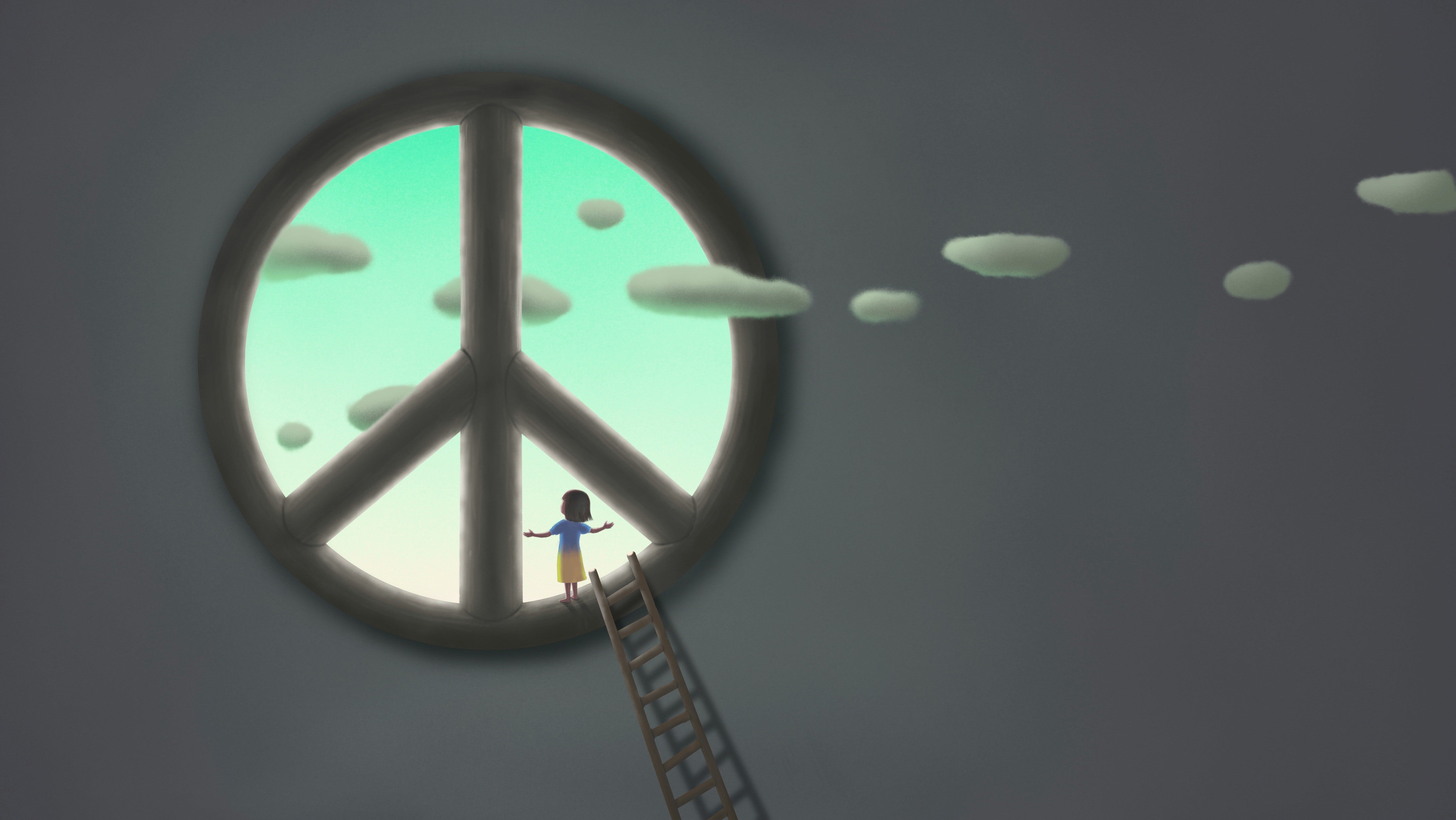
A new beginning.
Already, glimpses of that presence are shining through. In September, the Center hosted its first event: Peacebuilding in the Democratic Republic of Congo. Pastor James and Riziki Byensi, founders of Rebuilders Ministry, told their story of choosing reconciliation in a part of the African continent devastated by a decades’ long war. Their testimony reminded us that peace is not an abstract concept—it is an embodied state that resides within the people of God; a state that replaces fear with forgiveness, despair with courage, and destruction with rebuilding. Fuller faculty—Professors Alexia Salvatierra, Sebastian Kim, and Mary Glenn—joined the Byensi’s, reminding us that peace is never solitary but always communal. You can find more about this event, including a replay link, here.
From the beginning, our mission at the Center has been clear: to equip the Church to speak boldly on behalf of peace, to practice reconciliation in divided spaces, and to share Christ’s hope and healing with those wounded by conflict. In the months and years to come, you’ll see opportunities to join us in this pursuit: through events, workshops, webinars, retreats, and eventually a digital journal. We also have plans to launch a Certificate in Peacebuilding for those seeking deeper training and formation.
In the coming months you will have access to a free course, hosted on Fuller Equip. This resource will help explore why our name includes both peacebuilding AND conflict transformation, and why neither is complete without the other. At the heart of it lies a simple truth: Peace without conflict transformation cannot stand; conflict transformation without peace cannot endure. Only together do they form the foundation of lasting change.
While you wait for these opportunities, there are meaningful ways you can begin to walk with us now:
Ensure future Perspectives on Peace get delivered directly to your inbox, so you don’t miss out on future resources and news of upcoming events.
Forward this to a friend and invite them to subscribe.
Follow the Center on social media for updates and additional content.
Though it is a familiar refrain, peace is not the silence of conflict’s end, nor the calm in the middle of a raging storm. Rather, it is the presence of Christ’s reconciling love, made visible through God’s people. My prayer is that this newsletter will always serve as a reminder that you are not alone in the storm. Together, with our eyes fixed on Christ, we can see differently, live faithfully, and bear witness to a peace that endures even as the storms rage on.